
AQUA BLASTING
Our aqua blasting machines are the perfect alternative to dry blasting. Allowing a dust-free process with a softer surface finish which in cosmetic applications, keeps components cleaner for longer.
Aqua/Vapour Blasting generally gentler on surfaces compared to dry blasting. The water acts as a lubricant, reducing friction and heat generated during the blasting process. This makes it suitable for cleaning delicate or sensitive materials without causing damage to the component.
Vapor blasting produces a significantly cleaner/less contaminated surface by flushing out the abrasive with water. This process can also provide smoother, finer finish when required. This leaves surfaces clean and ready for the application of coatings.


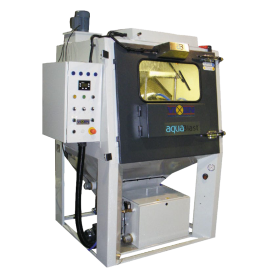
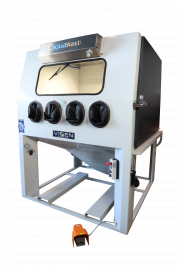
Applications for Aqua Blasting
Engine component cleaning: In automotive and aviation industries, vapour blasting is often used to clean engine components, cylinder heads, and other parts. The process is gentle enough to avoid damaging sensitive components while effectively removing grime and deposits.
Vapour honing (Aqua/Vapor blasting) cleans without removing any of the underlying metal or substrate. This allows for the cleaning of delicate parts and soft metals, even rubber and plastics. Stampings, machining marks, gasket faces are all left unaltered, so it is perfect for restoring automotive and motorcycle parts.
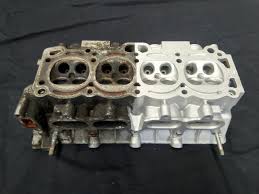
Precision Aqua Blasting Services
When it comes to restoring engineering components, cleaning industrial machinery, or prepping surfaces for subsequent coatings, maintaining structural and dimensional integrity is critical. Standard dry blasting methods can be overly aggressive, stripping away vital millimeters of material and altering tight engineering tolerances.
At TT Precision, our professional aqua blasting services (also widely known as vapor blasting or wet abrasive blasting) offer the ultimate solution. This advanced surface finishing process simultaneously cleans, degreases, and finishes components, delivering an immaculate, factory-fresh satin finish without causing any dimensional wear to the underlying substrate.
How Aqua Blasting Works: The Science of Wet Blasting
Unlike traditional grit or sandblasting—which relies purely on brute force and dry impact to shear away surface contaminants—aqua blasting introduces a crucial cushioning element: water.
The process utilizes a precisely calibrated slurry of water, compressed air, and specialized abrasive media (typically fine glass beads).
-
The Hydraulic Cushion: The water acts as a buffer, cushioning the media upon impact. Rather than eroding or pitting the metal, the slurry flows across the surface.
-
The Fluvial Washing Action: This hydraulic action lifts away dirt, grease, scale, rust, and carbon deposits through a scrubbing motion rather than a harsh abrasive strike.
-
The Result: A perfectly uniform, peened finish that closes the pores of the metal, making the component highly resistant to future finger-marking, staining, and corrosion.
Key Benefits of Vapor Blasting for Engineering Components
Choosing wet blasting over dry alternatives offers significant technical advantages for high-performance and precision-engineered parts:
-
Zero Dimensional Change: Because the water prevents media impingement, the process will not alter the tight tolerances of machined faces, bearing seats, threads, or delicate engine casings.
-
Elimination of Media Embedding: In dry blasting, microscopic fragments of grit can become embedded in softer alloys (like aluminum or brass), causing catastrophic failures later on. Aqua blasting washes the surface completely clean, leaving zero residue.
-
Superior Surface Finish: It produces a gorgeous, smooth satin sheen that actively enhances the aesthetic value of the component, making it highly sought after for automotive restoration, marine parts, and architectural engineering.
-
Dust-Free Process: The water completely encapsulates the media and debris, making it a cleaner, more controlled, and environmentally compliant finishing option.
Material Application Guide
Our advanced vapor blasting cabinets are capable of handling a diverse array of materials, tailoring the pressure and media matrix to suit your specific project:
| Material Type | Typical Applications | Finishes Achieved |
| Aluminum & Alloys | Cylinder heads, engine blocks, crankcases, manifolds | Original factory satin sheen; sealed pores |
| Stainless Steel | Marine hardware, architectural brackets, medical tooling | Uniform matte or satin finish; removes weld scale |
| Brass, Bronze & Copper | Vintage engineering components, valves, fittings | Bright, clean finish without losing intricate detail |
| Exotic Alloys | Aerospace parts, specialized motorsport components | Decontaminated, stress-relieved surface finishing |
Serving Industrial, Aerospace, and Automotive Sectors
Whether you require a one-off restoration of a classic motorcycle engine casing or high-volume batch processing for precision aerospace components, TT Precision possesses the expertise and machinery to deliver flawless results.
Our team understands the strict quality standards demanded by modern engineering industries. We evaluate every component beforehand to determine the ideal media size, water-to-media ratio, and air pressure required to achieve your exact finishing specifications.
Elevate your component finishing today. Contact the engineering experts at TT Precision to discuss your project requirements or request a comprehensive quote for our aqua blasting services.
Applications & Industries for
Aqua / Vapour blasting solutions
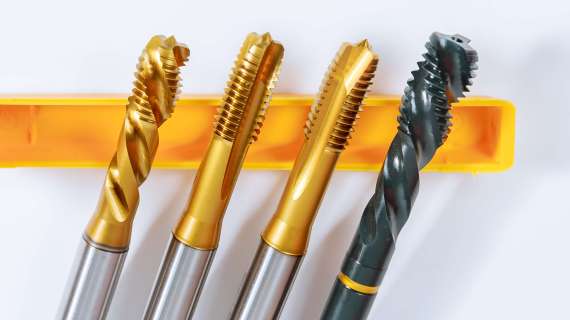
Tooling
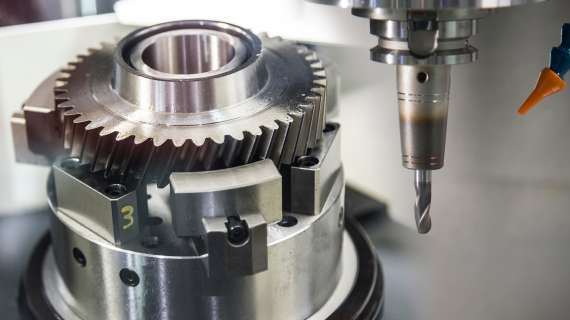
Deburring
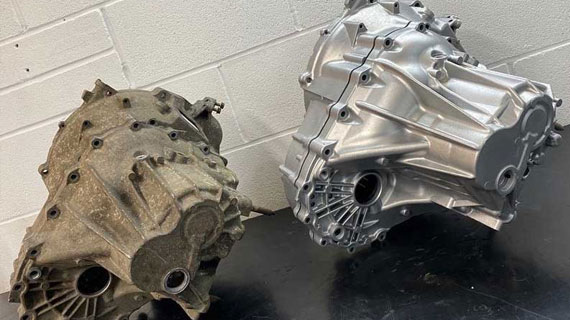
Engine Casings
Electrical
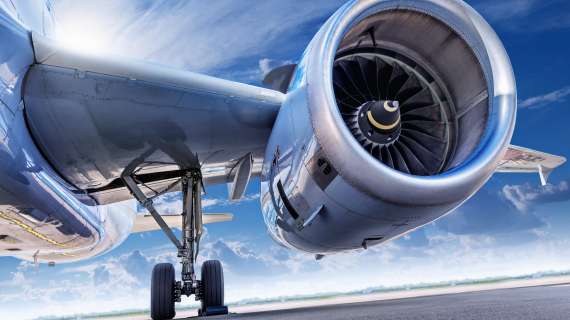
Aerospace
Paint Stripping
contact us
Should you like any further information on our aqua / vapour blsating services, please GET IN TOUCH… We will be happy to discuss your requirements.
